Stiazhkina, O. (2019). Styhma okupatsii: radianski zhinky u samobachenni 1940-kh rokiv [The stigma of occupation: Soviet women’s self-perception in the 1940s]. Dukh i Litera.
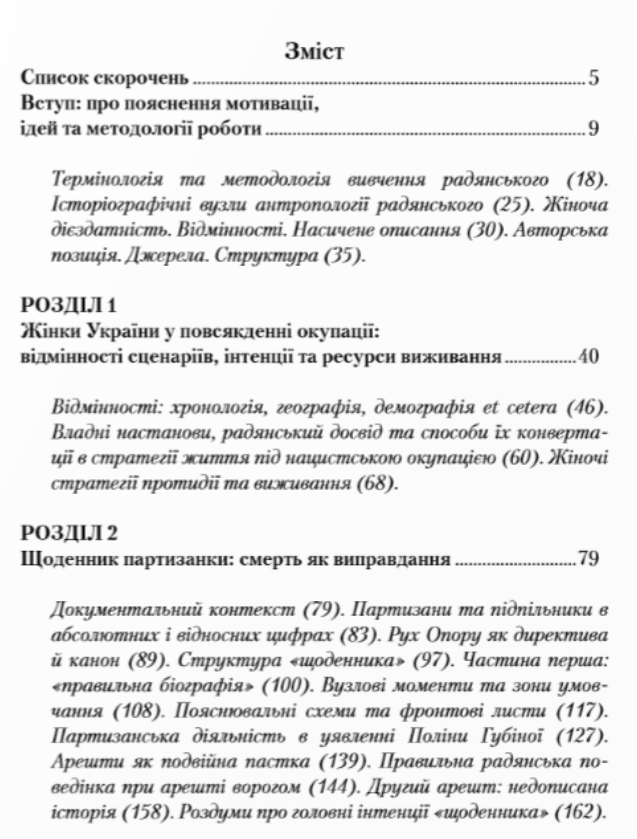
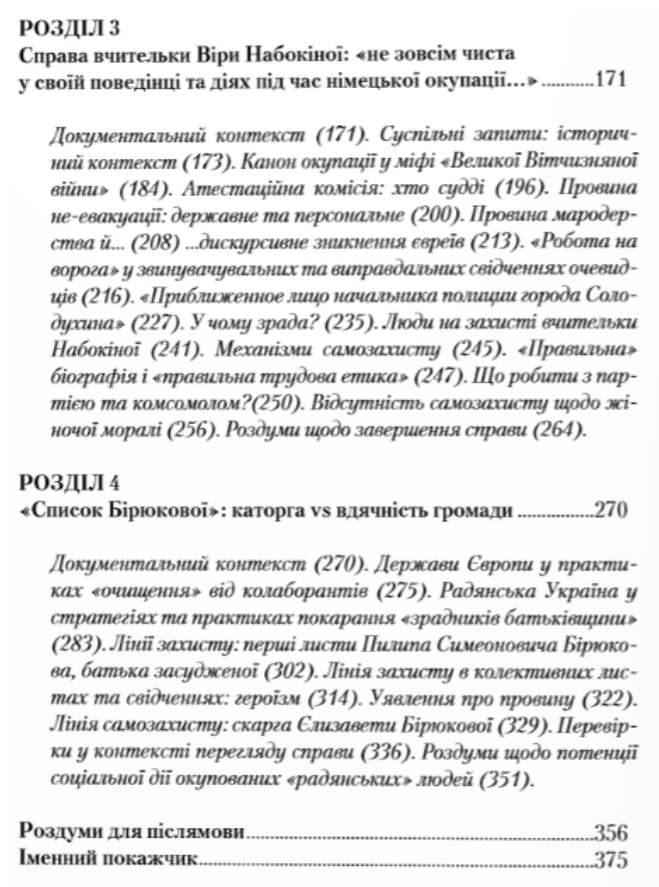
Annotation: The Stigma of Occupation: Soviet Women’s Self-Perception in the 1940s is a book about war and about the inability of people to make sense of the experience of occupation — both in the moment of living through it and in the first years after the Nazis were driven out. The study is built around the stories of three women and two regimes, one of which compelled its citizens to be Soviet and to die heroically, and the other — the Nazi regime — to renounce both the Soviet and the human. The book is about despair and survival, about differences in the understanding and perception of good and evil, about the search for and choice of strategies of life and death, about the fine and uncertain lines between collaboration and righteousness, resistance and detachment, looting and the support of others. It is also an analysis of women’s experience and of the traumatic and unstable process of searching for words and mechanisms of self-description within the contexts of “heroic deed,” “betrayal,” “enemies,” and “heroes” — categories that shifted throughout the 1940s under the influence of both the inner intentions of the women themselves and the pressure of established state propaganda concerning the “proper conduct” of Soviet citizens under occupation. It is the history of the formation of a state policy of stigmatizing those who had lived under occupation, and of the self-stigmatization of people who considered themselves Soviet. It is the history of the nonlinearity of wartime experience, told in the uncodified language of the women themselves — one of whom sought for herself a canonical heroic biography, a second who fought boldly and desperately for survival, and a third who saved others heedless of the risk of punishment by Nazi or Soviet authorities.