
In mid-April 2015, with the support of the Heinrich Böll Foundation Ukraine, a publication unprecedented in independent Ukraine appeared — the collected volume Central and East European Women and the Second World War: Gendered Experiences in a Time of Extreme Violence, edited by Helinada Hrinchenko, Kateryna Kobchenko, and Oksana Kis (Kyiv: Art-Knyha Publishing, 2015). The publication was prepared and issued in cooperation with the Institute of Ethnology, National Academy of Sciences of Ukraine, the Ukrainian Association for Research in Women’s History, and the Ukrainian Oral History Association, with the financial support of the Heinrich Böll Foundation Ukraine.
The idea for the book emerged in the course of organizing and hosting the international conference “Central and East European Women and the Second World War: Gendered Experiences in a Time of Extreme Violence,” held in Kyiv on November 28–29, 2013.
Already at that time, Ukrainian researchers — representatives of two professional historians’ associations (the Ukrainian Association for Research in Women’s History and the Ukrainian Oral History Association) — acutely recognized the enormous public and scholarly demand for high-quality research on various aspects of the “women and war” theme against the backdrop of a critical shortage of such studies in Ukrainian historiography.
For over a year, the academic editors of the volume — Helinada Hrinchenko, Kateryna Kobchenko, and Oksana Kis — selected texts and prepared for publication a volume without precedent in Ukraine. The book includes twenty scholarly articles, half of which represent Ukrainian historical scholarship. The academic editors personally translated ten texts from foreign languages, making those valuable studies accessible to Ukrainian readers. Among the authors are both emerging scholars taking their first steps in historical studies and experienced researchers recognized as experts in various thematic areas.
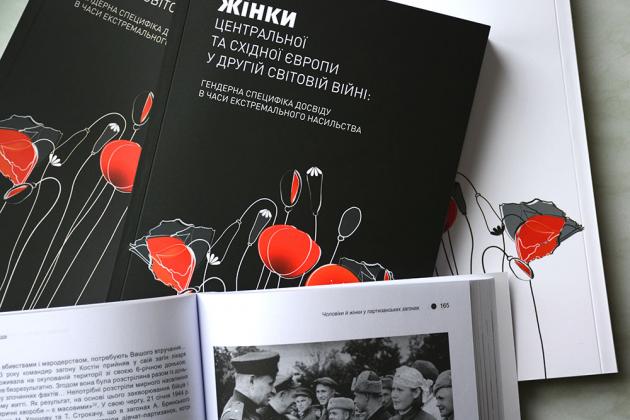
Drawing on the analysis of various types of historical sources, the researchers not only reveal understudied questions of women’s participation in combat and the particularities of captivity, illuminate the gendered dimensions of women’s involvement in the Soviet and nationalist underground, trace life in occupied territories and forced labor in the Third Reich, and analyze the gendered specificity of the Holocaust, but also raise difficult questions of violence against women and women’s complicity in acts of violence during wartime, problematize state memory policies regarding women’s contributions to the victory over Nazism, and discuss postwar representations of women’s wartime experience. Seeking to move beyond the stereotypical view of women within the triangle of “traitor — victim — heroine,” the researchers consistently present a complex and contradictory picture of women’s lives in extraordinary historical circumstances. The collected volume offers insight into contemporary feminist approaches to studying the “women and war” theme.
The uniqueness of this publication lies not only in its thematic focus but also in the way it was distributed: the Heinrich Böll Foundation Ukraine distributed the book free of charge, so anyone interested could obtain a copy during presentations of the volume in Ukrainian cities or by personally contacting the Foundation’s office. In addition, the book was donated to the major scholarly libraries. This made the publication accessible to scholars, educators, students, and activists of women’s organizations who, given financial constraints, would hardly have been able to afford such a purchase.
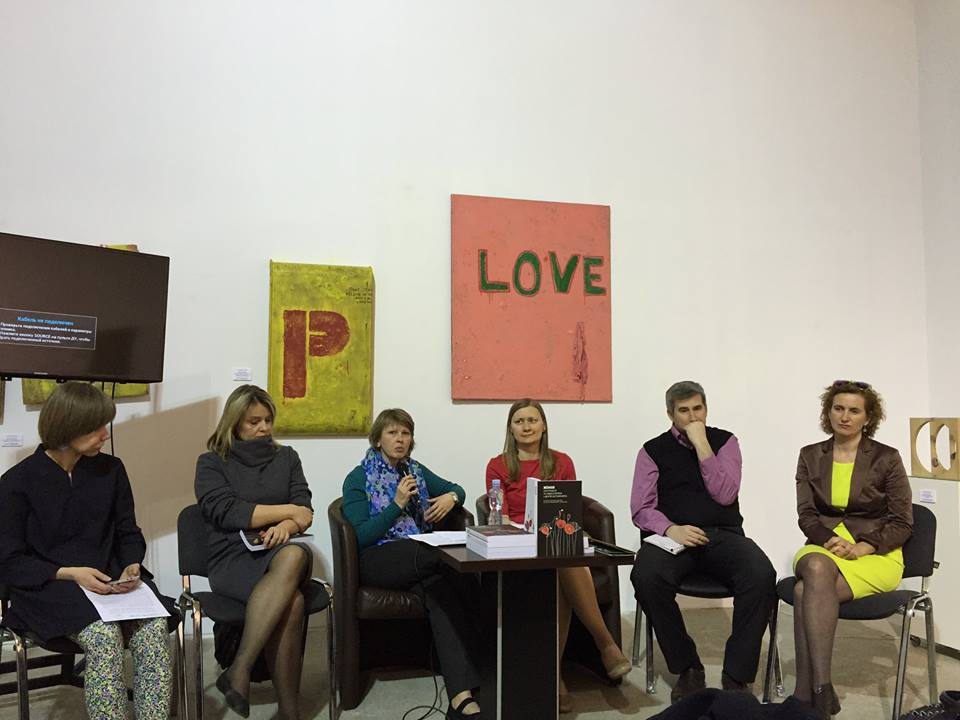
The first official presentation of the volume took place in Kyiv as part of the Book Arsenal on April 25, 2015. The event brought together co-editors of the volume Kateryna Kobchenko and Oksana Kis, along with authors — Olena Stiazhkina, Tetiana Pastushenko, and Anatolii Podolskyi. Despite a number of other landmark events at this prestigious book forum, the presentation attracted approximately fifty attendees. Kateryna Kobchenko and Oksana Kis briefly introduced the publication, describing how the idea for the volume originated, how the team of authors was assembled, what the concept was, and what goals the editors sought to achieve through these publications. The authors, in turn, drew attention to the exceptional relevance of studying women’s wartime experience in the context of the current situation in the country and the importance of tracing parallels between events of seventy years ago and the present day.
Discussion participants emphasized the need to understand and appreciate women’s contributions to victory then and now, the impossibility of unambiguous, categorical assessments (heroization or stigmatization) of inhabitants of occupied territories, and pointed to the particular risks women face in armed conflicts not only on account of their sex but also their ethnicity (as during the Holocaust), political views (pro-Ukrainian activists in the Donbas), religious convictions (Muslims in Crimea), and more. This first meeting alone demonstrated the existence of an enormous number of “blank spots” in Ukrainians’ knowledge about women’s wartime experience.
A detailed review of the event was published in the Informatsiino-pedahohichnyi biuleten Ukrainskoho tsentru vyvchennia istorii Holokostu [Information and Pedagogical Bulletin of the Ukrainian Center for Holocaust Studies] (Alina Pliekhanova, “Iakym ie zhinoche oblychchia Druhoi svitovoi viiny?” [What Is the Female Face of World War II?], no. 1/41, 2015, pp. 18–20).
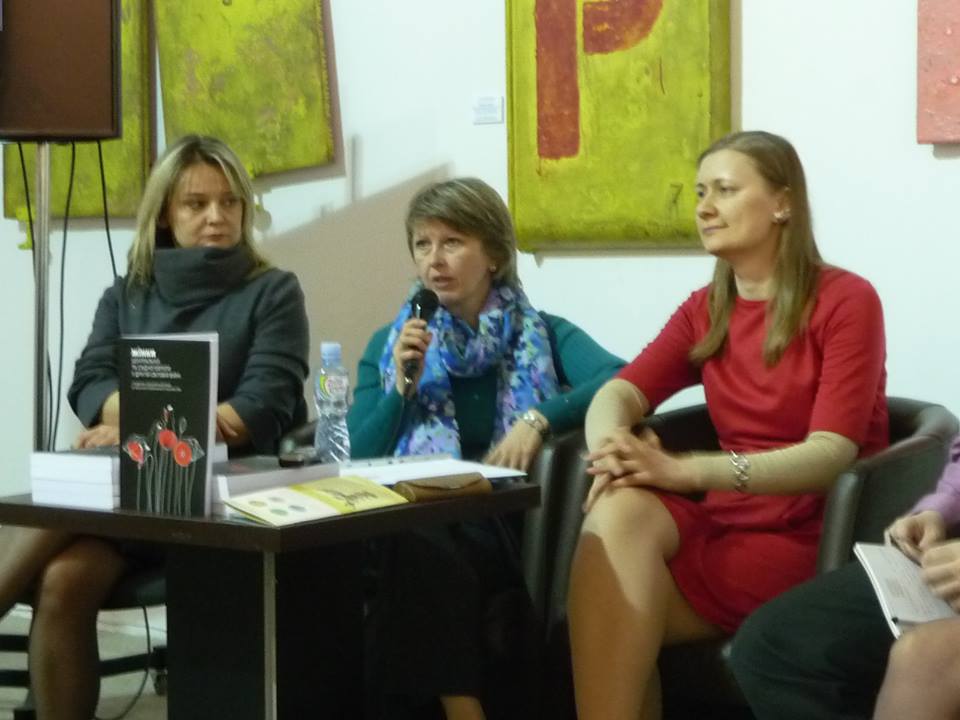
Throughout April–May 2015, a series of presentations of the volume and panel discussions on the topic of women’s wartime experience in World War II took place in cities across Ukraine, with the participation of the academic editors of the publication and authors of the studies published in it.
Participants at these events discussed challenges of studying various aspects of women’s wartime experience through the lens of their own research interests. During the discussions, the newly published collected volume was presented.
The panel discussion “Studying Women’s Wartime Experience in World War II: Venturing Beyond the (Un)Known,” with the participation of Oksana Kis (Institute of Ethnology, National Academy of Sciences of Ukraine), Kateryna Kobchenko (Center for Ukrainian Studies, Faculty of Philosophy, Shevchenko National University of Kyiv), and Marta Havryshko (Krypyakevych Institute of Ukrainian Studies, NAS of Ukraine) took place on April 30, 2015, in Lviv as part of the monthly methodological seminar of the Department of Social Anthropology at the Institute of Ethnology, National Academy of Sciences of Ukraine.
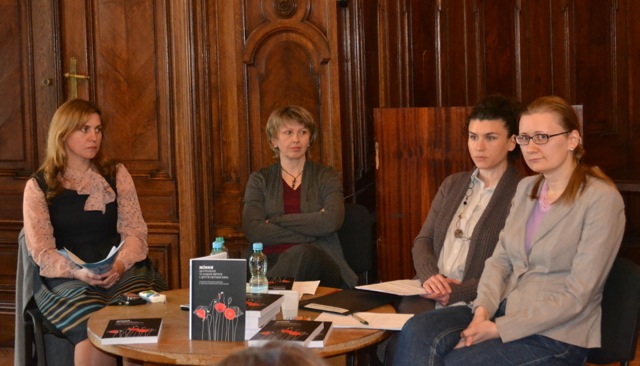
The event became a truly landmark scholarly occasion, bringing together in one circle historians and folklorists, political scientists and psychologists, art scholars and writers, activists and philosophers. Among those present were experienced scholars (historians Halyna Bodnar, Candidate of Historical Sciences (Ph.D. equivalent), Associate Professor at Franko University of Lviv; Oleksandra Stasiuk, Candidate of Historical Sciences (Ph.D. equivalent), Senior Research Fellow at the Krypyakevych Institute of Ukrainian Studies, NAS of Ukraine; Olha Bezhuk, Candidate of Historical Sciences (Ph.D. equivalent), Associate Professor at the Lviv Academy of Veterinary Medicine; political scientist Nataliia Oliinyk, Candidate of Political Sciences (Ph.D. equivalent), Associate Professor at the Institute of Banking, and others), as well as young researchers (Iryna Sklokina from the Center for Urban History, doctoral students Mariana Baidak, Yuliia Pavliv, and others), and activists of women’s civic organizations (Marta Chumalo — Western Ukrainian Center “Women’s Perspectives,” Anna Khvyl — “Feminist Workshop”).
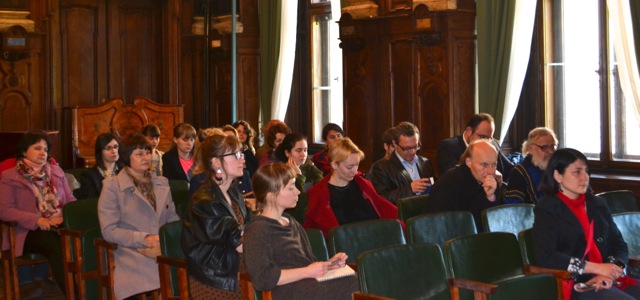
The topic raised in Marta Havryshko’s article about women’s experience in the nationalist underground in the 1940s generated particular interest and sharp debate, particularly the controversial and understudied questions of sexual abuse within the ranks of the OUN (Organization of Ukrainian Nationalists) and the UPA (Ukrainian Insurgent Army).
Yevhen Lunio, a folklorist who had spent many years recording the reminiscences of underground members, noted that the materials he collected were always dominated by stories of romantic love among the insurgents, and his informants never mentioned cases of sexual harassment. Ihor Markov, a social anthropologist, cautioned against categorical conclusions in interpreting such sensitive topics and called for a comprehensive and impartial study of all available sources and for measured assessments. The discussion, which lasted over two and a half hours, demonstrated lively interest among researchers in both the topics and the approaches to studying diverse women’s wartime experiences proposed in the volume. A review of the event was published on the website of the Department of Social Anthropology at the Institute of Ethnology, NAS of Ukraine.
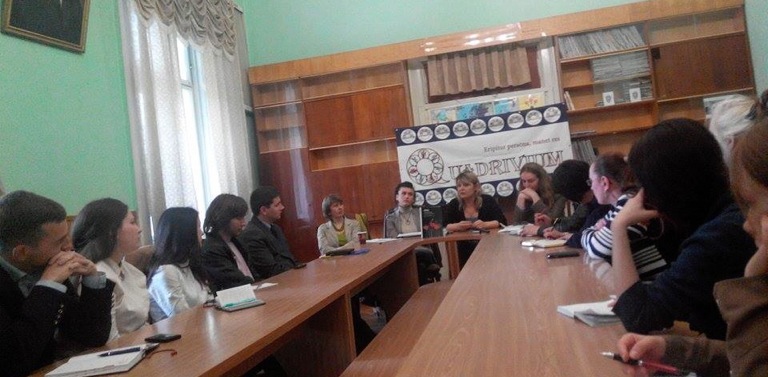
The panel discussion “Studying Women’s Wartime Experience in World War II: Everyday Life in Extraordinary Historical Circumstances,” timed to the 70th anniversary of the end of World War II, was organized on May 7, 2015, by members of the NGO “Quadrivium” at the Faculty of History, Political Science and International Relations of Fedkovych National University of Chernivtsi.
Speakers Oksana Kis (Institute of Ethnology, NAS of Ukraine), Olena Stiazhkina (Donetsk National University), and Marta Havryshko (Krypyakevych Institute of Ukrainian Studies, NAS of Ukraine) presented the volume and briefly outlined the content of their own studies featured in the book. Despite two other large-scale scholarly events taking place at Fedkovych National University of Chernivtsi that day (the opening of the Center for Romanian Studies and a roundtable on the peaceful resolution of the Russo-Ukrainian conflict), approximately forty scholars, educators, students, local history researchers, and activists gathered to discuss problems of studying women’s wartime experience in World War II.
Among those present were a number of faculty members of Fedkovych National University of Chernivtsi (Bohdan Bodnaruk, Doctor of Historical Sciences (habilitation equivalent), Professor; Oksana Ivasiuk, Candidate of Philological Sciences (Ph.D. equivalent), Associate Professor; Ivan Vorotniak, Candidate of Historical Sciences (Ph.D. equivalent), Associate Professor; Nataliia Nechaieva-Yuriichuk, Candidate of Political Sciences (Ph.D. equivalent), Associate Professor; Hanna Skoreiko, Candidate of Historical Sciences (Ph.D. equivalent), Associate Professor, and others).
Importantly, the majority of the audience consisted of undergraduate, master’s, and doctoral students of this university (including members of the Student Scholarly Historical Society Taras Piatnychuk, Bohdan Beisiuk, Marichka Protsiuk, Mykola Hlibishchuk, and others), who demonstrated genuine interest in the topics raised and especially in the approaches to studying aspects of war that had long been silenced or forbidden for research. During the discussion, the educators, students, and local history researchers shared their own experience of recording women’s wartime reminiscences and discussed the complex ethical questions of researching traumatic experience.
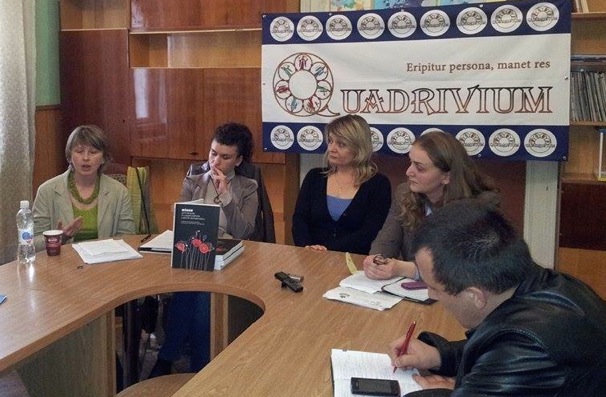
Members of the civic organization “Quadrivium” (political scientist Inna Kubai, historian Viktor Muderechvych, writer and literary scholar Khrystyna Venhryniuk), which unites specialists from various fields of the humanities to study Ukrainian and world axiological experience of the past with the aim of using it to shape sustainable development policy for Ukrainian society, lent the event a special atmosphere.
The central topic of discussion at this meeting was the comparison of World War II with contemporary military events in the Donbas: Olena Stiazhkina fielded numerous questions about the similarities of life under occupation, collaboration, underground resistance, and more then and now. The event attracted the attention of local media: a video report on the event aired in the evening news broadcast of the Chernivtsi regional television.
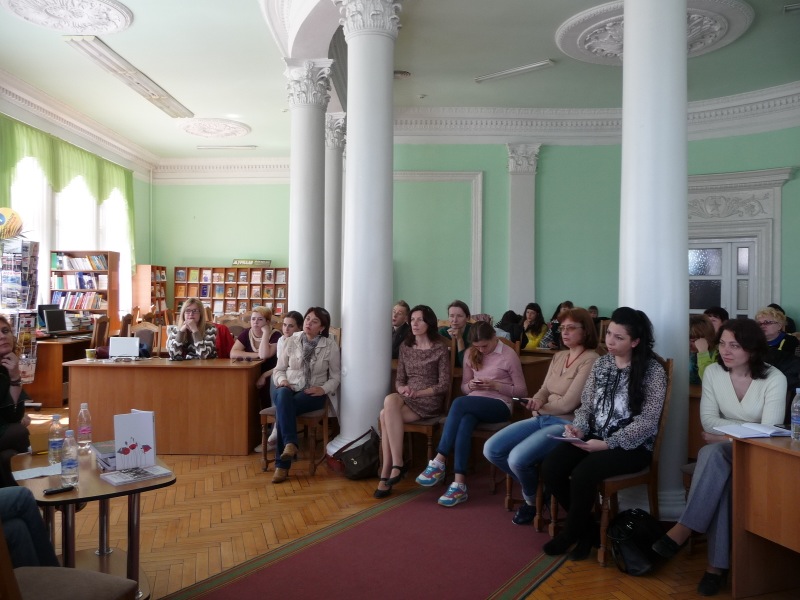
The presentation of the collected volume “Central and East European Women and the Second World War: Gendered Experiences in a Time of Extreme Violence” took place on May 16, 2015, in Vinnytsia at the Timiriazev Regional Universal Scientific Library, with the participation of Oksana Kis (Institute of Ethnology, National Academy of Sciences of Ukraine), Tetiana Pastushenko (Institute of History of Ukraine, NAS of Ukraine), and Olena Petrenko (Ruhr University Bochum, Germany). The event was organized and moderated by Olha Koliastruk, Doctor of Historical Sciences (habilitation equivalent), Professor, Head of the Department of Philosophy, Social and Political Disciplines, and Ethnology at Kotsyubynsky State Pedagogical University of Vinnytsia.
The event took place as part of Europe Day celebrations in Vinnytsia, which lent the discussion a special focus. On this weekend day, those who gathered to discuss the problems of researching the gendered dimensions of total war included not only educators and students of Vinnytsia’s leading higher education institution — Kotsyubynsky State Pedagogical University of Vinnytsia (historian Tetiana Karoieva, Candidate of Historical Sciences (Ph.D. equivalent), Associate Professor; philosopher Emiliia Melnyk, Candidate of Philosophical Sciences (Ph.D. equivalent), Associate Professor; ethnologist Valentyna Hrebeniova, Candidate of Historical Sciences (Ph.D. equivalent), Associate Professor; doctoral student Anastasiia Pokliatska, and others) — but also representatives of other higher education institutions, scholarly and cultural institutions: cultural studies scholar Nataliia Ivanova (Vinnytsia National Medical University), Olena Taranenko (Head of the Department of Journalism, Donetsk National University), Nataliia Laas (Candidate of Historical Sciences (Ph.D. equivalent), Institute of History of Ukraine, NAS of Ukraine), Olena Zashko, a student at Donetsk National University, Oksana Yatsiuk (Center “Ukrainian Children’s Literature”), poet Ilona Mykytiuk, Polina Tsymbaliuk (Deputy Director of the Library), and others.
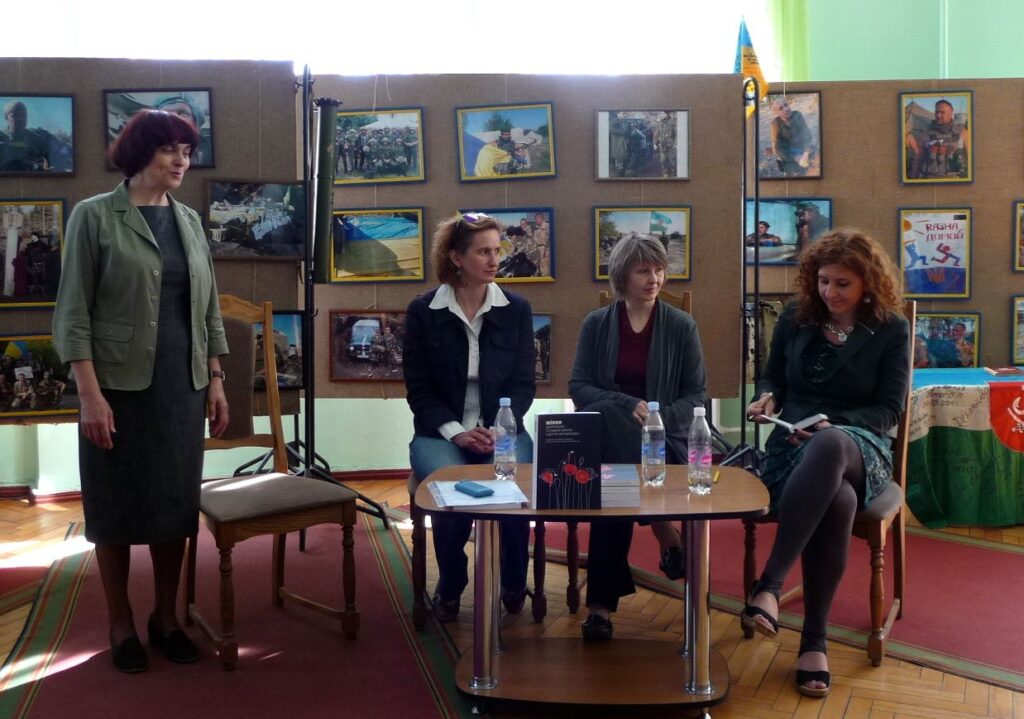
During the discussion, those present spoke favorably about the very idea of studying women’s contributions to victory, especially in view of women’s current participation both in the Armed Forces of Ukraine and volunteer battalions engaged in combat in the Anti-Terrorist Operation zone, as well as the exceptional role of women in the volunteer movement — support for the Ukrainian military and medical services in frontline regions. Discussion participants were interested in further prospects for the development of research in this field in Ukraine, with the goal of properly studying and incorporating the women’s dimension into histories of World War II, however unheroic and contradictory it may be.
A particularly moving moment came when Olena Taranenko, the author-compiler of the collection “Stories of Non-Separatist Women,” which contains reflections by women educators and students of Donetsk National University (now operating in Vinnytsia) about the situation in eastern Ukraine, presented copies of the publication to participants of the presentation. The leitmotif of the conversation was the thesis that to find peace in our country, we must thoroughly study our past without closing our eyes to difficult and painful topics, so as to acknowledge and accept past mistakes and not repeat them in the future. The book presentation became a notable event in the city, covered in an extensive report in the regional newspaper (Valentyna Pustiva, “Zhinoche oblychchia viiny” [The Female Face of War], Vinnytska hazeta, no. 41, May 22, 2015, p. 3). In addition to this official presentation, the volume was also more informally presented to participants of the scholarly seminar “The History of Soviet Everyday Life: At the Crossroads of Sources,” held the day before (May 14–15, 2015) at Kotsyubynsky State Pedagogical University of Vinnytsia, which brought together early-career and established researchers from across Ukraine.
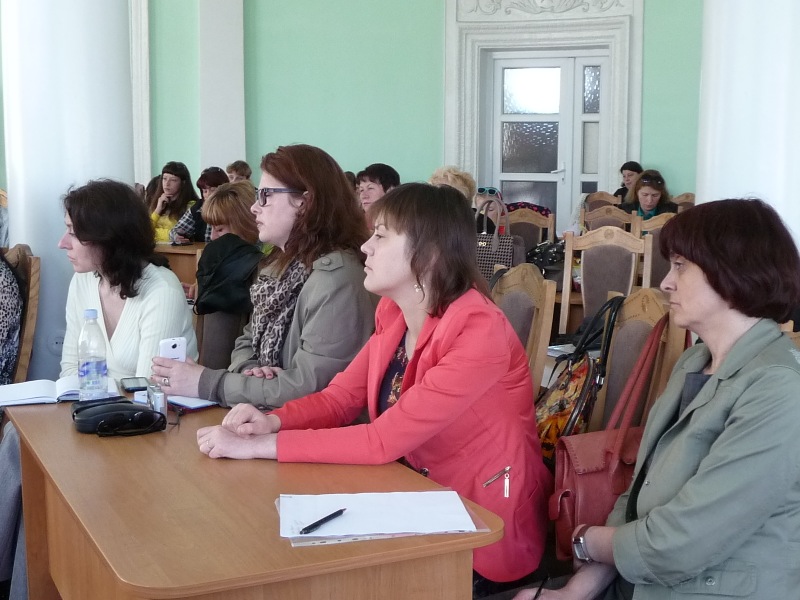
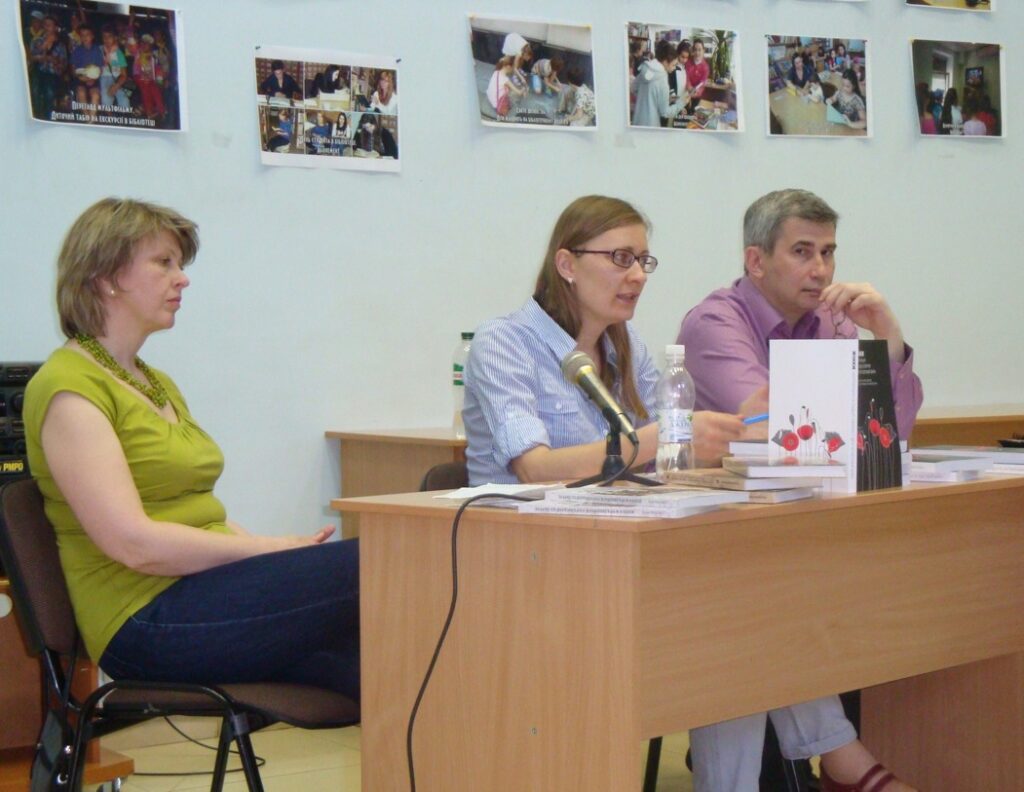
The panel discussion “Women and War: The World War II Experience Through a Gender Lens,” with the participation of Oksana Kis (Institute of Ethnology, NAS of Ukraine), Kateryna Kobchenko (Center for Ukrainian Studies, Faculty of Philosophy, Shevchenko National University of Kyiv), and Anatolii Podolskyi (Ukrainian Center for Holocaust Studies) took place on May 21, 2015, at the Dnipropetrovsk Central City Library. The event took on a special resonance given the city’s frontline status. The event organizer, Viktoriia Narizhna — a translator, writer, staff member of the gallery-bookshop “Black Lizard,” and activist of the volunteer initiative ” Sisterly Hundred” — found support from the library’s leadership, which graciously provided a comfortable venue for the event.
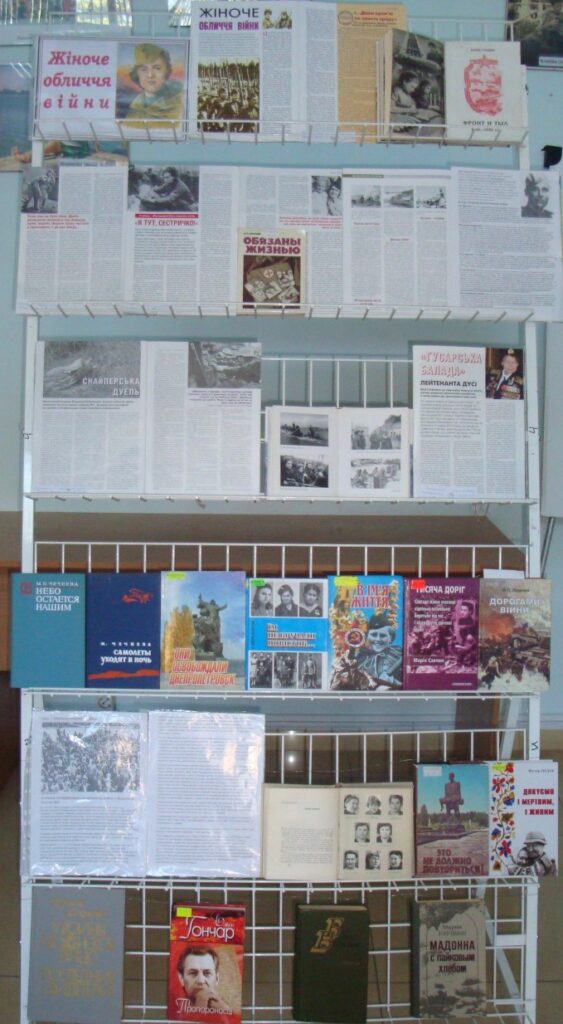
Moreover, Kateryna Fedorchenko, the chief librarian, specially prepared for the occasion an exhibition of publications on the theme “The Female Face of War” from the library’s holdings. These book and journal publications represent various aspects of women’s wartime experience in World War II — from participation in combat units at the front to heroic labor on the home front, from personal reminiscences and memoirs to document collections and biographical essays.
Among the discussion participants were educators and students from Dnipropetrovsk’s higher education institutions, local history researchers, writers, and activists (Vadym Osin, Candidate of Political Sciences (Ph.D. equivalent), Associate Professor at the Academy of Customs Service of Ukraine; Oleh Repan, Candidate of Historical Sciences (Ph.D. equivalent), Associate Professor at Dnipropetrovsk National University; Anna Miahkykh, Director of the Center for Gender Studies at Dnipropetrovsk National Railway Transport University and members of this center; Ihor Kocherhin, Candidate of Historical Sciences (Ph.D. equivalent), Chair of the Dnipropetrovsk Regional Branch of the National Union of Local History Researchers of Ukraine; Yana Bilenko, a student at the Academy of Customs Service of Ukraine; Natalia Deviatko, a writer, and others).
During the discussion, those present agreed that the well-known phrase “war does not have a female face” is now losing its meaning: the war Ukraine is currently waging for its independence and sovereignty has many female faces — from the world-famous captured military pilot Nadiia Savchenko to thousands of fighters, nurses, and volunteers unknown to the world. History proves that women’s experiences in times of extraordinary mass violence differ little, and understanding current events is possible by learning what women lived through during World War II. As at all previous presentations of the volume, those present showed keen interest in the general state of research on the “women and war” theme in Ukraine and worldwide, emphasized the necessity of thoroughly studying the reminiscences of women who personally lived through those events, and shared their own stories of encounters with women veterans, prisoners, and Ostarbeiter. The majority of those in the audience were students and young researchers who asked highly substantive questions about the methodology of women’s and gender history and debated the advantages and limitations of various types of historical sources.
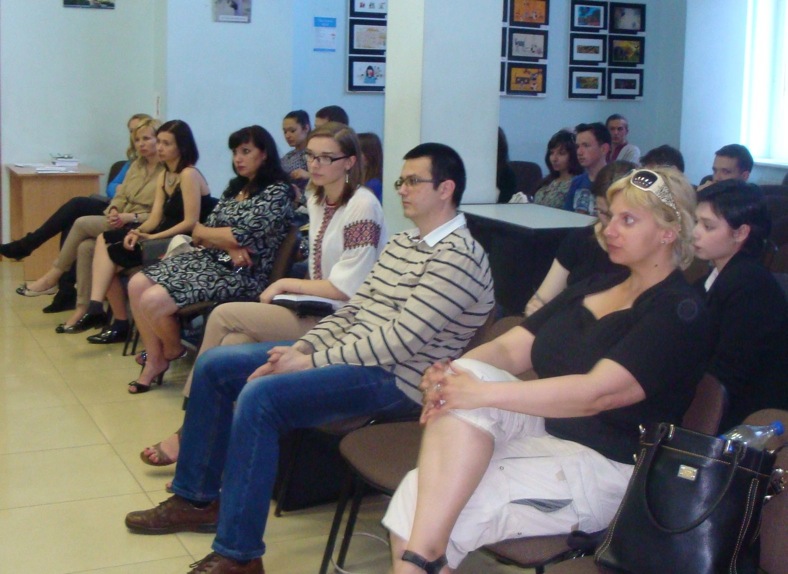
The presentation events unequivocally demonstrated that Ukrainian society has an enormous demand for thorough historical research on the “women and war” theme — a demand that takes on particular urgency and relevance against the backdrop of current political events. Knowledge about the diverse and ambiguous women’s wartime experience in World War II can help today’s citizens of Ukraine better understand the importance of accounting for the gendered specificity of women’s roles and contributions during armed conflicts, and more fully utilize the knowledge, skills, and experience gained by women in all spheres of public life. Proper and dignified representation of diverse women’s wartime experience in the media will help Ukrainian society more quickly shed false notions about the past and overcome gender stereotypes that impede progress. Thus, the experience of the presentations demonstrates the timeliness and relevance of both the publication itself and the presentation events, interest in which is evident in other cities and scholarly-educational centers across Ukraine as well.
Review prepared by Oksana Kis.